
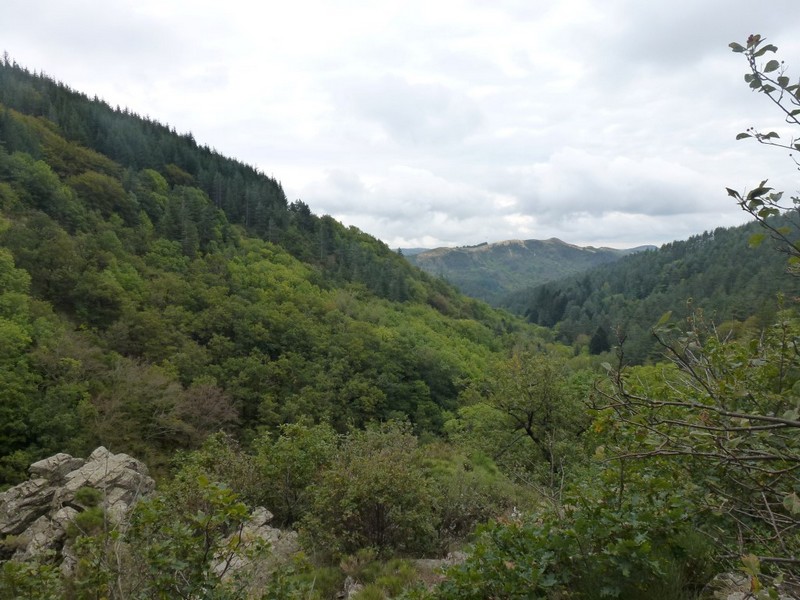
The Arboretum and the River Vis
9 points of interest
© C. Daquo 
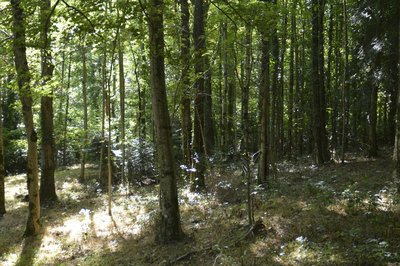
The landscape closes in
When hayfields are abandoned, their flora develops very quickly. Grasses give way to tougher plants, such as stinging-nettles, brambles and dog rose. Then come wild fruit trees (sloe, hazelnut, dogwood, cherry, etc.), and finally shrubs and trees such as Scots pine, black pine, ash, black locust, oak and chestnut.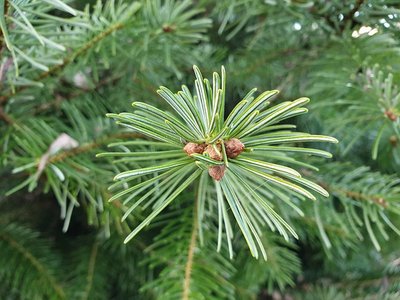
Sapin de Nordmann - © Hans Braxmeier  Flora
FloraNordmann firs
In the arboretum, several Mediterranean fir species were acclimatised. The trees girded in white were monitored by scientists. A report from 1976 by the French Forestry Office engineer Jean Pourtet states: “A very handsome cluster of Abies nordmanniana planted in 1903-1904 contained, in 1953, 32 high-quality trees that were numbered and measured. Their average circumference at 50 years of age was 125 cm”. Today, these same specimens have an average circumference of 230 cm and an average height of 40 m.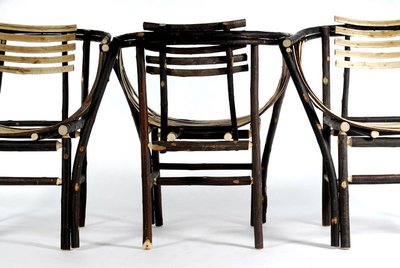
Mobiliers en chatâignier concçus par l'Atelier Chatersen (Alzon) - © Atelier Chatersen FloraThe chestnut tree
Before reforestation in the late 19th century, the local landscape was varied: sheep pasture on moors and meadows; crops: potatoes, cereals, hay fields, orchards and gardens; woods (chestnut, oak or beech).
A few enormous chestnut tree trunks bear witness to this past. These grafted trees produced food for people (chestnuts, flour, etc.), flowers for the bees, dry wood for the fire, timber (for wooden roof structures, boards, battens, etc.), hives (rusquet), stakes and canes, wooden gutters (hollowed-out half trunks), etc.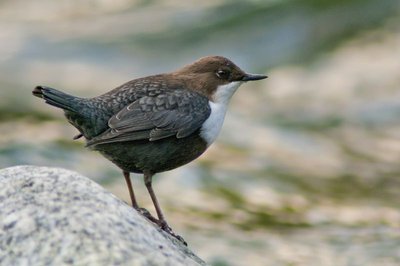
cincle plongeur - © Gaël Karczewski  Fauna
FaunaRiver fauna
This river is the kingdom of the brown trout, which reproduces (spawns) here. A ball of brown and white feathers level with the water is the emblematic bird of torrents: the white-throated dipper. It feeds on insects and larvae , which it eats submerged while moving against the current by walking on the riverbed! Its nest is a big ball of moss, which shelters two broods of 4 to 5 baby birds a year.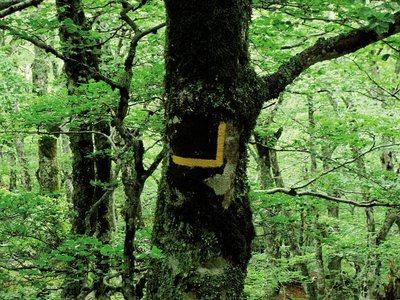
Marquage d'un ilôt de sénescence - © Mathieu Baconnet 
Forestry management
This forest parcel consists of several units, which are managed differently. Some of its stand of large Corsican pines were “regeneratively” felled in 2007 to gather wood and encourage the regeneration of young trees. The parcel’s copses of oak and chestnut will be managed so as to preserve and favour tillers (young trees judged straight and vigorous enough to grow into handsome mature forest). Below you on the slope is a stand of protected ash trees, which are being left to evolve naturally.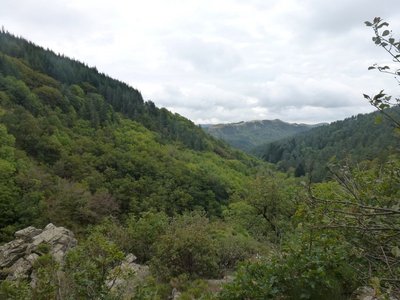
© C. Daquo FloraTree stands
From the viewpoint over the cascades at La Fabrié, the opposite slope presents a neat demarcation between stands of leafy trees (oaks and chestnuts) lower down and, higher up, conifers that were planted in reforestation operations. Different species were chosen to take account of local environmental conditions, such as the nature and depth of the soil, water reserves, microclimates, exposure: Douglas firs on one side and Atlas cedars with their blueish branches on the other.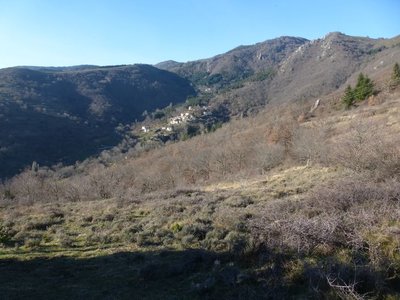
Vue sur le col de l'Airette - © Nathalie Thomas 
Col des Tempêtes
Between the Col de l'Airette and the Col des Tempêtes, you may notice ruined buildings below the track. They are vestiges of former sheepfolds, where the flocks moving up from the valley could shelter for the night or in bad weather. (Jérôme Reversat)
© Valère Marsaudon 
The béal (irrigation channel)
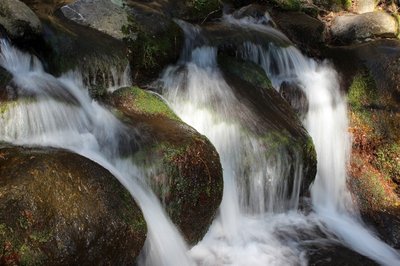
In the Cévennes, the impetuous torrents of March shrink to rivulets by mid-June. To make up for the lack of water, this irrigation system combines a dam in the riverbed with a small canal (béal) dug into the bank, which diverts the water towards a storage basin built out of dry stones (pesquier). This method used the natural energy of the current and irrigated the hayfields and even gardens and orchards.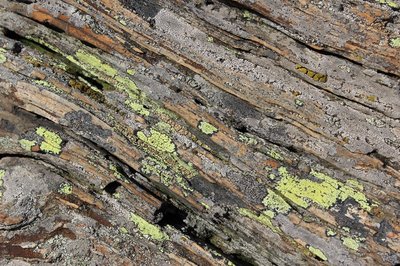
Schiste - © Valère Marsaudon 
Schist
The region’s schist was formed in the Palaeozoic, between 550 and 500 million years ago. It is mainly composed of micas, hence its precise name of mica schist. Its particularity is to divide into parallel layers. Chemical weathering turns schist into clay. This rock was much used in construction and has shaped the landscape: house walls, stone roofs; crop terraces; slab floors, paving; hive covers, chimney cowls, etc.
Description
Signposts will guide you all along this route. In the description below, the signposted place names and/or directions are given in bold italics between quotation marks :
Starting at "ALZON", in the car park of “L’ARBORETUM DE CAZEBONNE”, walk to “LE VILLARET" via:
- "Cazebonne",
- “Les Lauzières”,
- “La Fabrié”,
- “Chemin des Cascades”.
- At "LE VILLARET" continue to:
- “Coste Gineste”,
- “Nabairial”. From there, go back to the car park at “L ‘ARBORETUM DE CAZEBONNE” via:
- “Les Lauzières” and “Cazebonne”.
This walk is taken from the guidebook Les Vallées Cévenoles - En Pays Viganais, published by the Communauté de communes Pays Viganais-Cévennes as part of the collection Espaces Naturels Gardois and the label Gard Pleine Nature.
- Departure : Alzon (Cazebonne Arboretum car park)
- Arrival : Alzon (Cazebonne Arboretum car park)
- Towns crossed : Alzon and Arrigas
Forecast
Altimetric profile
Recommandations
Make sure your equipment is appropriate for the day’s weather conditions. Take enough water, wear sturdy shoes and put on a hat.
Transport
Alès bus line 142
Nîmes bus line 140
Montpellier bus line 608
Le Vigan - Alzon bus line 101 (Saturdays only)
LIO Région Occitanie - https://lio.laregion.fr/
Access and parking
From Alès or Nîmes take the D999 to Le Vigan then Alzon. In Alzon, take the D231 to the car park at the Cazebonne Arboretum.
Parking :
Source

Report a problem or an error
If you have found an error on this page or if you have noticed any problems during your hike, please report them to us here: